Home
Categories
Air Treatment Products

Dehumidifiers

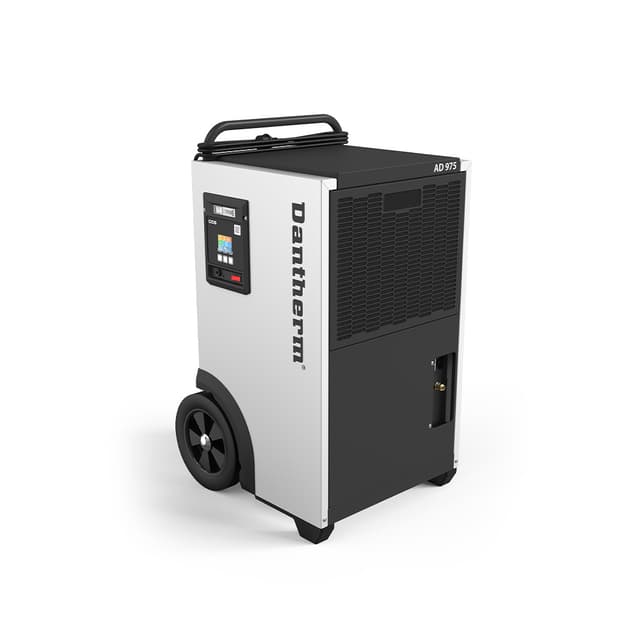
A dehumidifier is a machine that is designed to reduce humidity for homes, commercial and industrial application. Based on the purpose and the type of application, dehumidifiers can be segregated into portable dehumidifiers, duct-mounted dehumidifiers and ceiling-mounted dehumidifiers. If we classify based on the technology of dehumidifiers, it can be classified as desiccant and condensation type dehumidifiers. A condensation type dehumidifier works using the principle of condensation to remove moisture whereas desiccant dehumidifiers have a silica gel rotor wheel to absorb the moisture.

Condensation Dehumidifiers

Explore category
category

Frequently asked questions

A dehumidifier machine works by removing the moisture present in the air to desired humidity levels in 3 easy steps: 1. Suck the air to be treated inside the machine. This is usually your humid air. 2. Remove the water content or moisture either through condensation principle or dessicant principle. 3. Release the air back into the air after the moisture has been removed. Condensation water or hot humid air is also released as a waste during this process.

Yes, it can be reused for cleaning or gardening purposes. It should not be used for drinking purposes.

This usually happens when the condensation or refrigerant dehumidifier breaks down. Another reason although rare is when the humidity is too low such as 20% rh and your condensation dehumidifier can only reduce till 40% rh, then there is no dehumidification or water vapor removal happening. Check with your service provider to check the exact cause of breakdown.

Some common applications include but are not limited to water damage restoration, prevent mold in bedrooms, dry clothes in laundry rooms, decreasing humidity in swimming pool areas, closets, protecting valuables in living rooms, decreasing moisture for perishable items in cold rooms, maintaining optimum humidity conditions for food & pharmaceutical warehouses, and protecting equipment and cars from rust in garages.

No, a dehumidifier cannot cool air in an area. As a matter of fact, it can make the air more warmer due to additional heat lead during the dehumidification process. The heat in the air can be estimated by analyzing the type and capacity of a dehumidifier.

Portable dehumidifiers are more suited for a room. When choosing a dehumidifier for a room in a personal space like bedrooms, look out for portability, in-built water tank and less noise. When choosing a dehumidifier for a commercial such as a laundry room - you can compromise on the sound level but focus on capacity and rated air flows. For very large rooms, we recommend ceiling or ducted dehumidifiers as they can cover a large area without occupying floor space.

A dehumidifier is used to remove moisture from the air whereas a humidifier is used to add moisture to the air. As they serve opposite purposes, their working principle and technology is completely different.

Yes, we have installation services for all our dehumidifiers. We have expertise in installing industrial dehumidifier whether it has to be ducted to an AHU or installed on a ceiling or for low temperature zone such as cold rooms.

Yes, we do provide dehumidifiers for rent on select models only. The prices depend on the duration of dehumidifier rental.

Yes, dehumidifiers can run continuously or they can stop once the desired humidity levels have been achieved. We recommend using in-built or external hygrostats to stop once humidity is achieved and restart when it again starts to rise. This extends the life of the dehumidifier as well as reduces your electric bill.

Yes, there are few models available.